
Hastings Resident Lookup Sources
A name search is not a single record search. Each official source answers a narrower question, so the useful result is the one that states both the person's role and the record date. The county parcel system can orient an address question, while a court index can locate a case reference. A marriage index can identify an event, but it cannot establish a current address. This distinction keeps a Hastings resident lookup from turning a same-name hit into an unsupported claim.
| Record route | Question it can answer | Hastings or Minnesota custodian | Access path |
|---|---|---|---|
| Parcel and property card | Whether a supplied address connects to a parcel, fee owner, or mailing address | Dakota County Property Information | Free address or parcel-ID search |
| Registration match | Whether supplied identity and address inputs return a registration status | MNVotes | Person-specific match, not a household list |
| Court index | Whether a public case index has a matching party and case reference | Minnesota Court Records Online | Free remote search; terminal or clerk for more |
| Marriage and vital routes | Whether an indexed event or an eligible certificate route exists | Minnesota Official Marriage System and county registrar | Index access differs from certificate access |
| License or business filing | Whether an official credential or filing names the person in that role | Minnesota Secretary of State or the relevant board | Use the office's own search or copy route |
Start with the record tied to the fact already known. An address belongs in the parcel system first. A case number belongs in the court portal. A family-history question may begin with a marriage, death, directory, or archive lead. A public property result can show a fee owner and a different mailing address, so it does not by itself say who lives at the parcel. When the aim is to look up a resident, keep the source, role, and date together.
Starting a Hastings Resident Lookup
Use an evidence ladder. For a current address question, normalize the address and inspect the county parcel result before moving to a recorded document. For a registration question, the individual should use the official voter match with the required information. For a historical name, a telephone directory, census, obituary clipping, tax record, or deed can supply a dated lead. The next record should test that lead, not merely repeat it.
- Write the name exactly as it appears, including any middle initial or known variant, and note the address or time period that makes the search meaningful.
- Check the least intrusive official index that fits the question. Keep the record date, location, and the person's role in the result.
- Test a second, independent record. Compare a parcel's situs address with its owner mailing address, or compare a court case detail with a known date and county.
- Ask the actual custodian for an older, restricted, or certified record only when that product is necessary and the requester is eligible.
A document trail should record the source URL, access date, spelling used, record number or parcel ID, and the remaining uncertainty. That small discipline is especially useful when a business agent, a relative, an attorney, or a prior owner shares the target's name.
Confirming a Hastings Resident
Verification means matching facts, not gathering the most results. The Dakota County parcel map accepts an address or parcel ID and may show the property address, municipality, fee owner, and mailing address. Move from that parcel to the legal description or recorded-document route only if the question is ownership. For a court match, use the name, location, dates, and case category to separate people with similar names. A vital index can corroborate an event, but it does not convert a name into a current-residence conclusion.
- Docket
- A docket is the court's running list of filings and events in a case. It identifies activity; it is not a biography of a party.
- Index and image
- An index points to a record through fields such as name, date, or number. The image is the underlying scanned document and may have a different access route.
- Certified copy
- A certified copy is issued by the record custodian with its official certification. A portal screen or downloaded search result is not the same product.
For a whole-street question, the address sequence belongs with the Hastings street directory. A one-person question calls for a narrower chain: match the name to a dated role, confirm it with another official record, and mark anything that remains unproven.
Hastings Court Name Checks
The local trial court is Dakota County District Court, and MCRO is the statewide public index for a court-name check. It offers Case, Document, Hearing, and Judgment search tabs after its terms are accepted. Begin with the exact name and Dakota location, then try Sounds Like and a broad filing-date span if the name is common. Narrowing by category or status too early can hide a result. A missing remote result does not prove that a person has no court record.
| MCRO control | How it helps identify the right record |
|---|---|
| Name mode | Choose Exact or Sounds Like; the latter cannot use a wildcard. |
| Name fields | Last name is the main field; first and middle names can narrow the match. |
| Date and category | Date of birth where lawfully available, filing date, case category, and status are optional filters. |
| Location | Search statewide or select Dakota County after broad results are reviewed. |
| Other routes | Case number, citation number, attorney, document, hearing, and judgment searches use their own tabs. |
The MCRO case-search screen shows the available search tabs and filters.
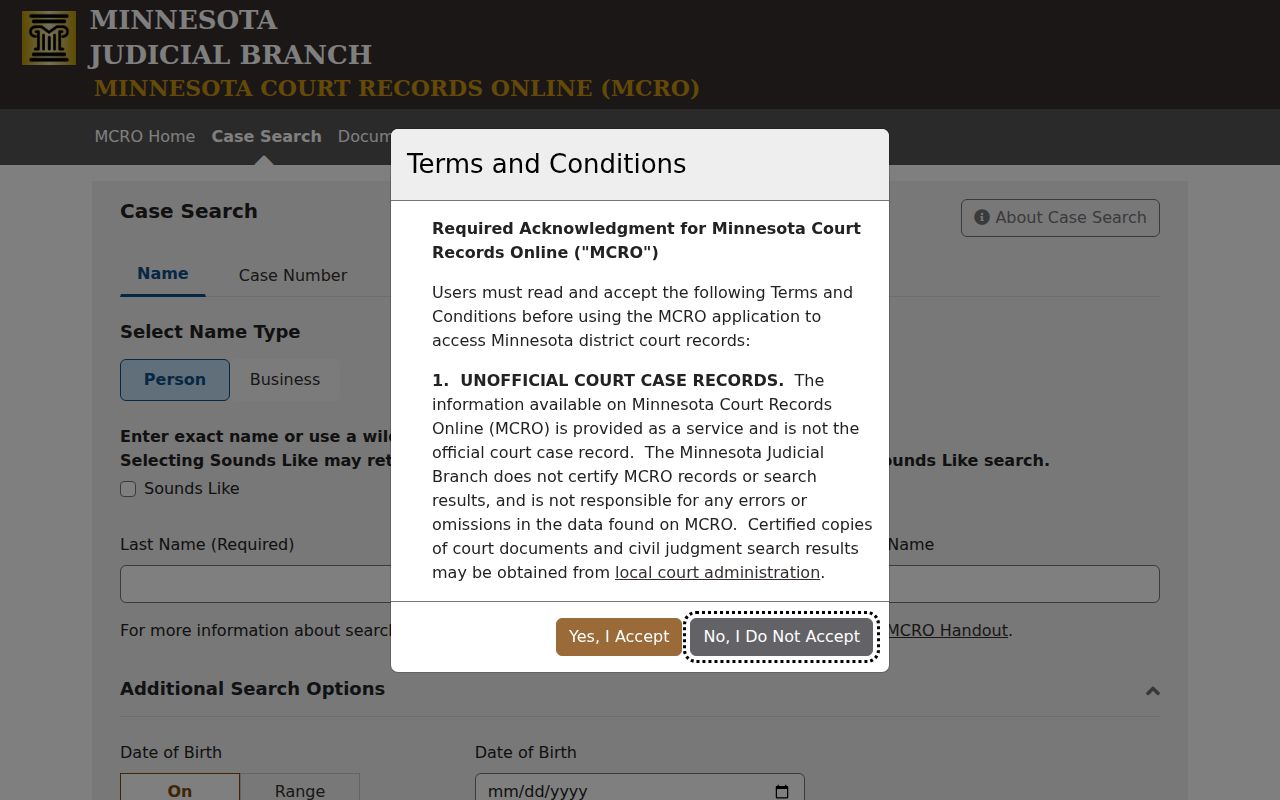
A case detail can show a case number, title, party roles, category, filing date, location, status, judicial officer, hearings, financial entries, and Register of Actions links. Record the fields that identify the case before drawing any conclusion from a name match.
- Case number, title, and the party role attached to each name.
- Case category, filing date, court location, and judicial officer.
- Open or closed status, citation number when present, and case flags.
- Related cases, upcoming hearings, financial entries, and dated Register of Actions events.
Remote access has category and date limits, while sensitive, sealed, expunged, adoption, juvenile, and protected material is limited or excluded. For older or fuller files, use the clerk or courthouse public terminal. A certified court product comes from the clerk, not from this screen.
Hastings Voter Match Rules
MNVotes is a person-and-address match, not a public roster of everyone nearby. The form requires first name, last name, date of birth, and an address search through ZIP or county mode. For Hastings, ZIP mode also asks for county, city or township, house number, street, and a unit when applicable. The service updates nightly, and a new registration can take time to appear after processing. A failed match should be checked against the person's actual registered spelling and address format, not treated as proof that the person is absent.
| MNVotes field group | Captured format or purpose |
|---|---|
| Identity | First and last name plus date of birth in month/day/year format. |
| Search mode | Choose ZIP Code or county search; one mode is required. |
| Address | ZIP, county, city or township, numeric house number, and street are used for ZIP mode. |
| Unit | Select the apartment or unit option only when the actual registered address includes one. |
| Result | The match gives registration status or a next step while protected identifiers stay out of the public result. |
The Minnesota voter-lookup form illustrates the exact identity and address controls used for this limited verification.
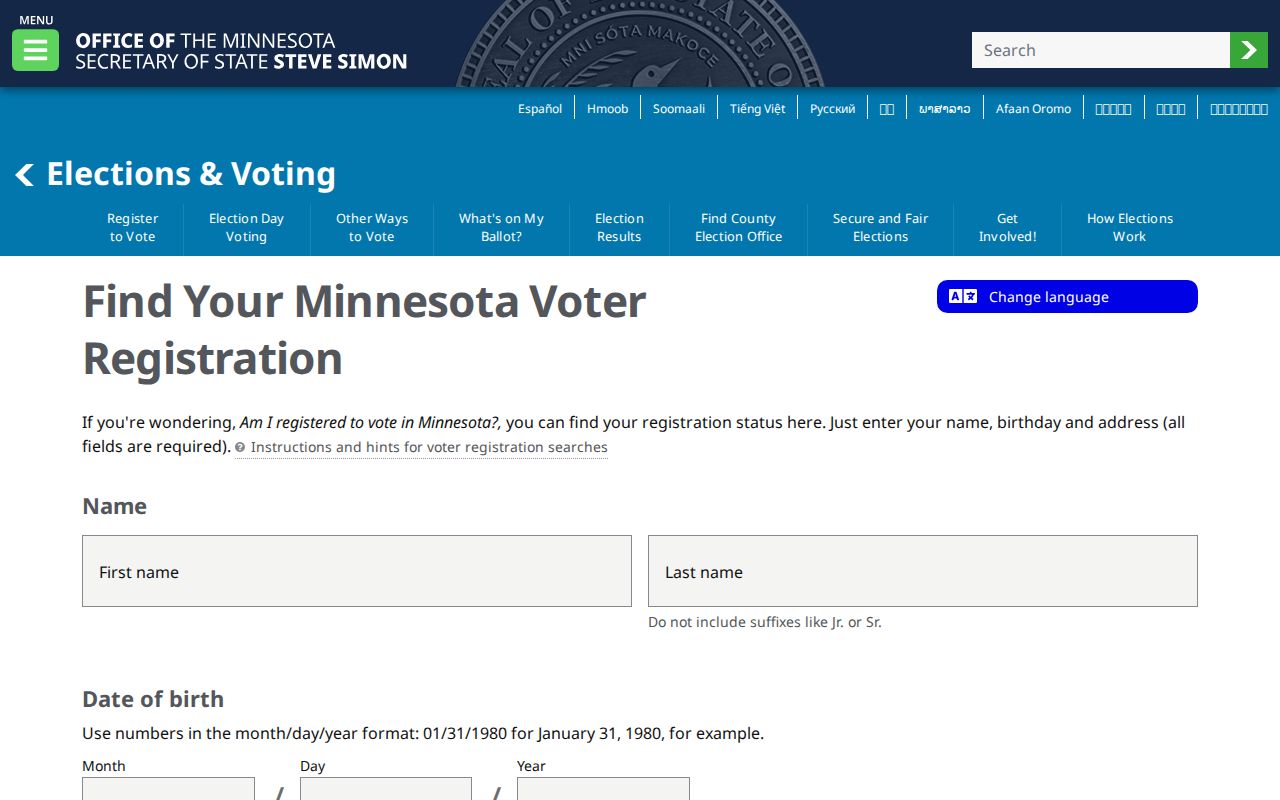
County Elections can answer local registration, absentee, polling-place, and correction questions. A statewide voter-file request is a separate, certified process limited by Minn. Stat. §201.091. It requires a registered Minnesota voter, a lawful purpose, and a chosen geography; it is not a substitute for the individual matching tool.
Note: A registration status can support a careful name match, but it does not prove ownership, complete household membership, or lasting occupancy.
Hastings Vital Record Paths
Vital records answer event questions, not general location questions. Minnesota's MOMS marriage index lists Dakota County coverage from 1850 to the present, but its result is an index and the certificate remains with the county that issued the license. The Minnesota Department of Health maintains birth and death products, while Dakota County Vital Records is the local registrar route. Birth records have classification rules, including the public period for records of married parents; noncertified death records are public, while certified products require eligibility and identification.
The Dakota certified-birth application shows the requester, subject, eligibility, identity, signature, delivery, and payment fields the county uses.
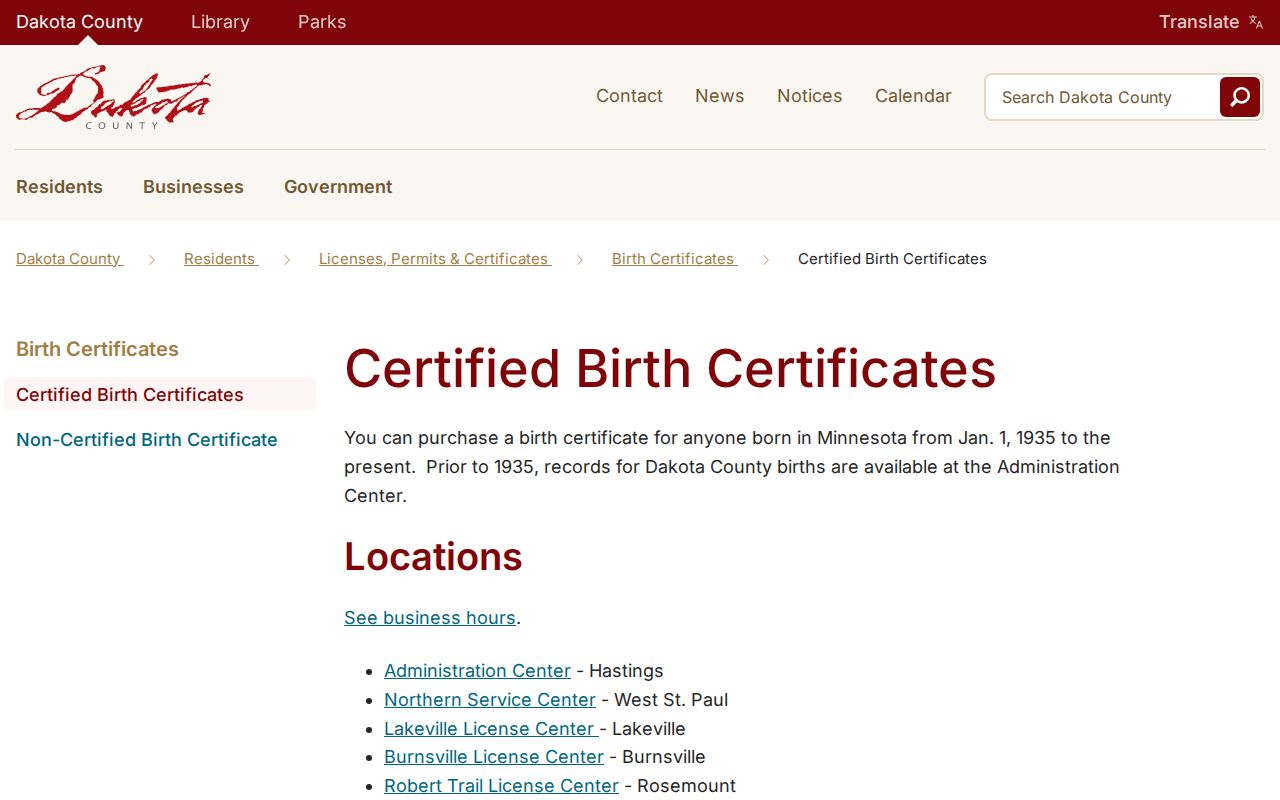
Use the public index or noncertified path when that is the lawful and sufficient record. For a certified product, verify eligibility with the county or MDH before applying. Do not infer a current Hastings address from a birth, death, marriage, or divorce record. For historical work, pair a dated event with directories, census records, deeds, church or cemetery material, and newspapers.
Hastings Names Need Context
One of the most common errors in a resident lookup is treating a property result as a residence statement. Dakota County separates a parcel's situs or property address from the fee owner's mailing address. The owner may live elsewhere, may hold the parcel through an entity, or may be a prior owner in an older record. The same caution applies to a court party, a telephone subscriber, an attorney, a witness, a business agent, and a MOMS result. Match the person to the role first.
Useful test. Compare the name, role, date, municipality, and record number before joining two results. Matching surnames or ZIP labels alone are not enough.
For a business or professional question, use the Secretary of State business-services hub or the relevant state board. An assumed-name filing can show an office or agent address, but it does not establish a private home address. This is why the record category should always stay attached to the claim being checked.
Hastings Status Searches Differ
Custody and supervision lookups answer a separate status question. The Dakota County Jail search covers current custody and accepts last name, first name, posting-date range, or court-date inputs. The page warns that results may not be current, accurate, or complete, and that fingerprint confirmation is the reliable identity check. A jail result is not a current-address record or a complete case history.
The Dakota County Jail search displays the available current-custody fields and warnings.
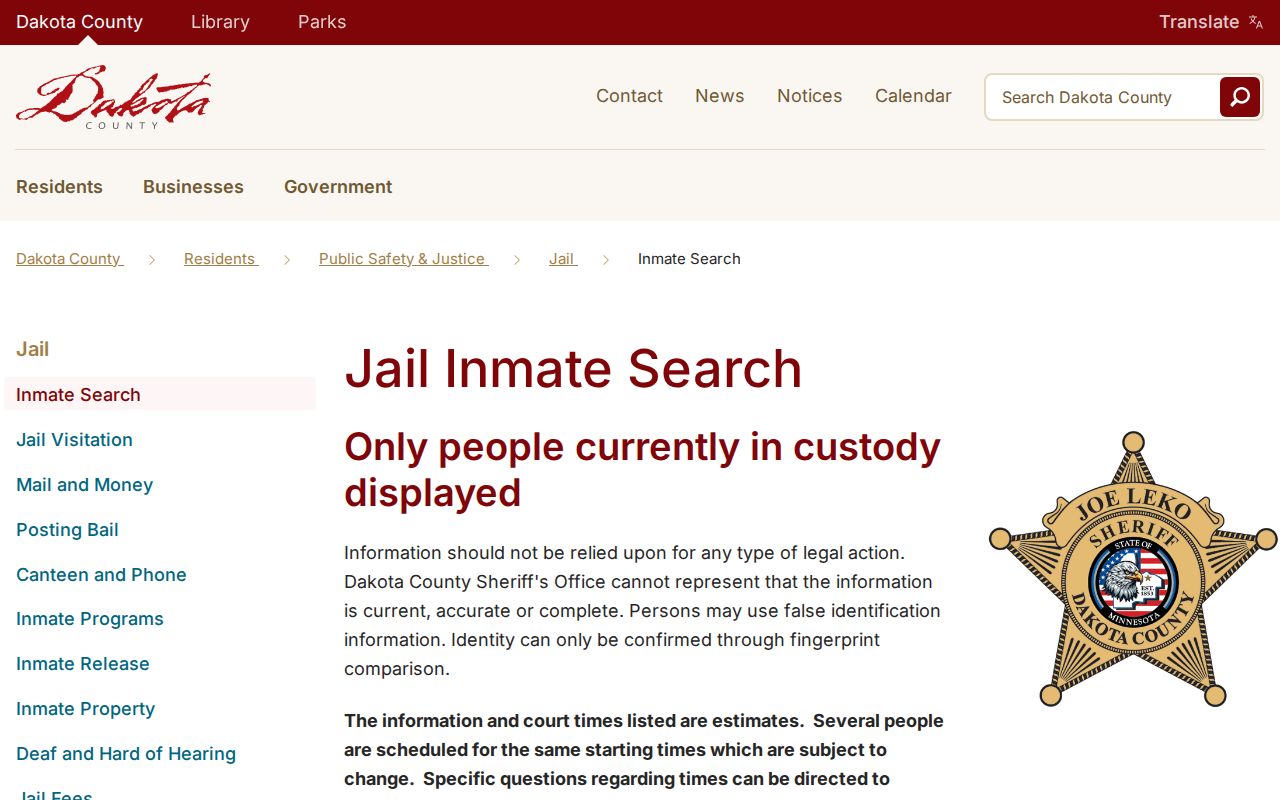
The Minnesota DOC public viewer is another limited status tool. It accepts a first name, last name, or MNDOC Offender ID for adults under DOC jurisdiction, including people on supervised release.
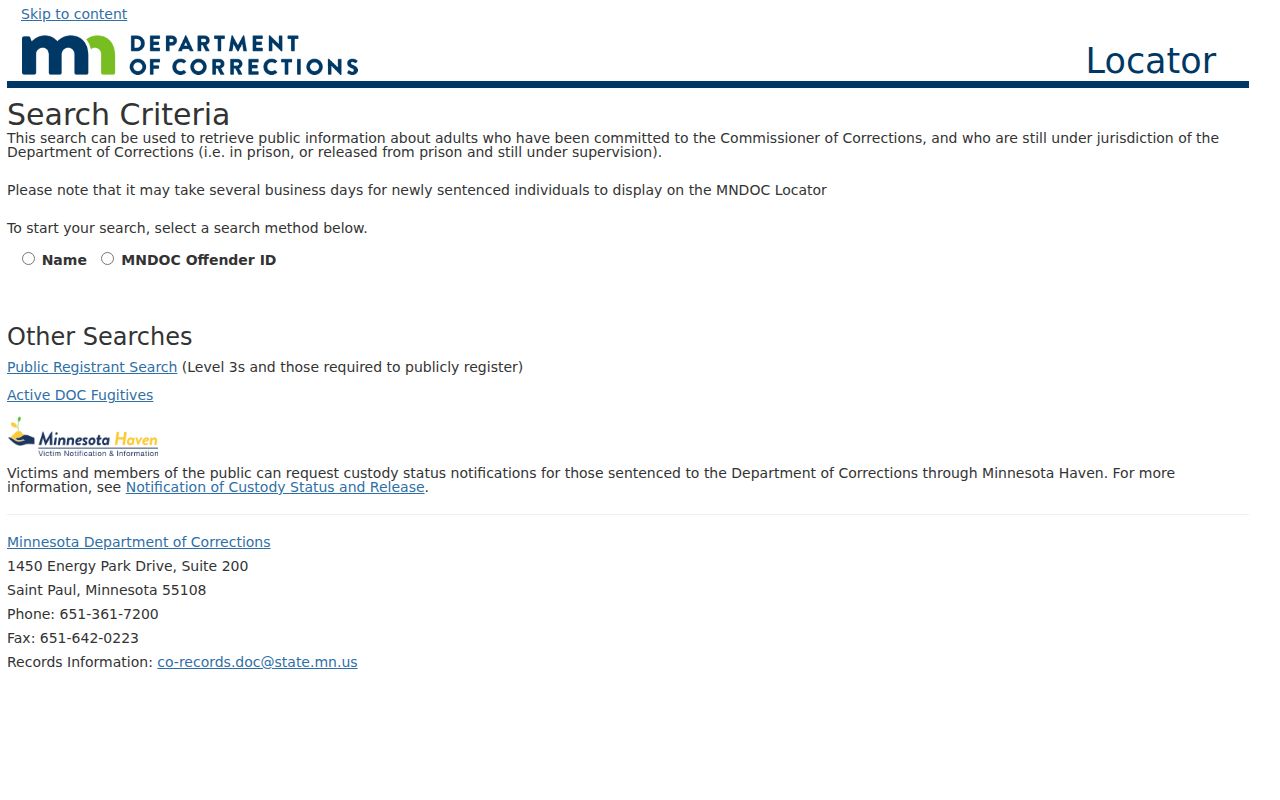
These results should be checked against a case number and court record when a case-specific question exists. They must not be used to label a neighbor, infer a home address, or make a claim from a name alone.
Hastings Requests and Privacy
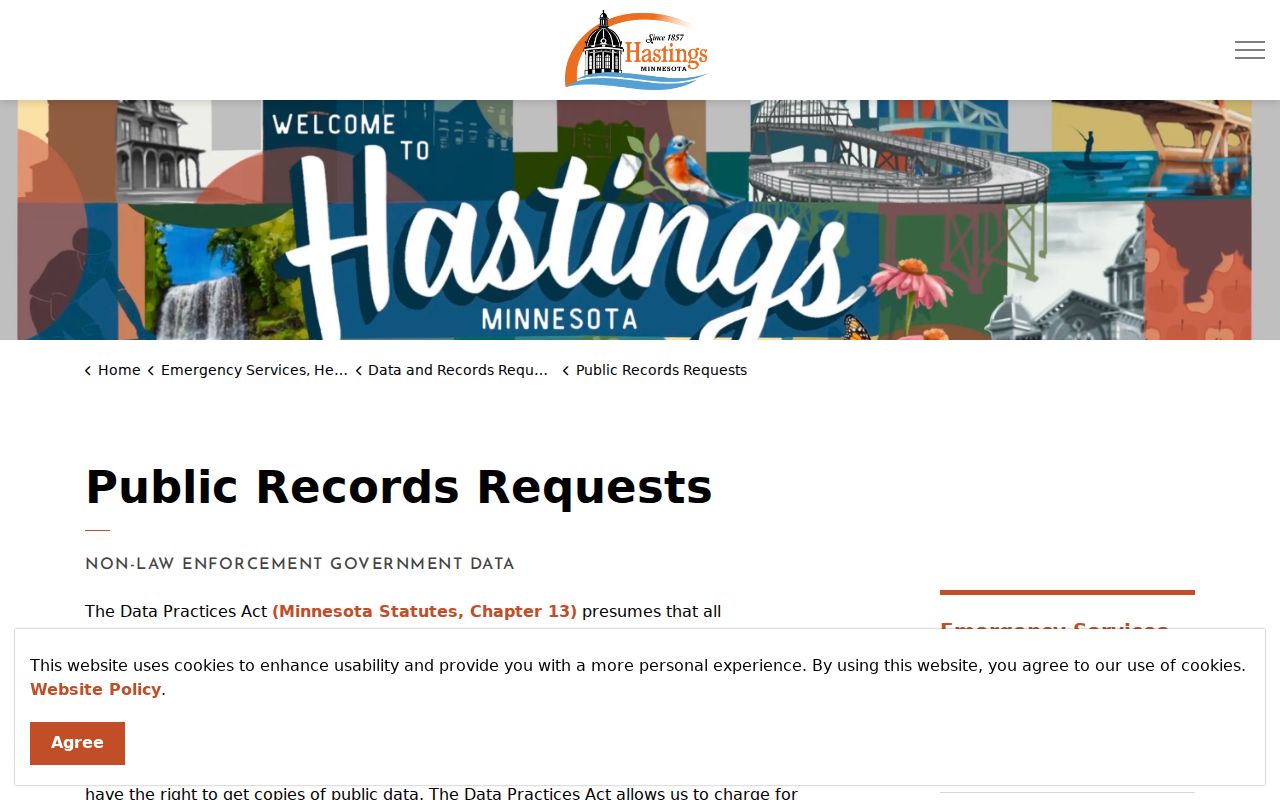
When an online result is incomplete, the custodian is the fallback. Hastings accepts written Minnesota Government Data Practices Act requests that clearly describe the records sought and state whether inspection, copies, or both are requested. Public inspection is free; copies are subject to the applicable statutory or actual-cost limits. The city must respond to a summary-data request within 10 business days, although a request for private data needs the right identity, consent, or authority.
The Hastings public-records request page provides the city route, form links, and response guidance.
Some gaps are intentional. Safe at Home assigns eligible participants a substitute post-office box and protects the real location in public-facing government interactions. Court records also limit remote access to sensitive categories and protected addresses. A request to one custodian cannot erase an archival, county, state, or court record held by another office.
Lawful Hastings Resident Lookup Limits
Minnesota records law opens particular public fields and closes others. Full voter birth dates and several identity numbers are not public-list fields. Safe at Home locations, protected court information, sealed or expunged matters, adoption information, and restricted vital products require the correct legal channel or remain unavailable. If a record appears wrong, preserve the source and date, then ask the office that holds it about correction, classification, or a more complete official copy.
Lawful use. Use a Hastings resident lookup for personal, lawful research, family history, estate questions, or verifying a record. Using information to stalk, harass, intimidate, or harm anyone can violate Minnesota law.
Note: The most reliable result identifies the custodian, record date, and the exact point that remains uncertain instead of filling a gap with an assumption.